The social licence challenge facing Australia's data centre sector
16
June
2026
4
min read
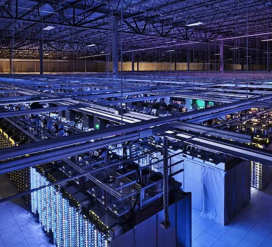
As one of the most attractive countries for data centre investment, what are some of the social licence challenges facing the sector in Australia?
Introduction
Australia is ranked one of the most attractive countries for data centre investment globally, according to the 2024 Knight Frank Data Centres Global Forecast Report, coming second behind the United States.
Major global and local players, including AWS, Microsoft, CDC, and NextDC, are investing billions into Australia’s data centre network, with Atlassian co-founder Scott Farquhar even suggesting the nation could become Southeast Asia’s data centre hub. On 26 May 2026, OpenAI’s CEO, Sam Altman, declared that Australia has some of the “best natural resources and abundant clean energy [stores] in the world, and if Australia wanted to become a data centre capital of the world, it would certainly be able to”.
However, unlike previous waves of major infrastructure investment or other similarly energy intensive assets, the community benefits are harder to sell.
The sector is looking to grow a new industry at a time in Australia where trust is low, scepticism is high, and voters are looking for policies and ideas that benefit them first; the country second.
Key Facts
- Australia currently has around 275 data centres.
- Data centres account for approximately 5 per cent of total national electricity generation and 2.2 per cent of total grid demand across the National Electricity Market (NEM).
- Research forecasts that data centre energy demand will rise to between 8-15 per cent of total national electricity generation by 2030.
- Sydney Water forecasts that data centres could use up to 25 per cent of the city's drinkable water by 2035.
Policy and Political Landscape
National AI Plan
In December 2025, the Federal Government released the National AI Plan. It positions data centre investment as central to Australia's AI ambitions, framing digital infrastructure not as a peripheral concern but a prerequisite for sovereign AI capability.
The Plan notes Australia’s attractiveness, with announced investments between 2023 and 2025 potentially scaling to more than $100 billion, and also commits the Government to coordinating regulatory and other approvals across states and territories.
Expectations for data centres
Building on the National Plan, in March 2026, Assistant Minister for Science, Technology and the Digital Economy, Andrew Charlton MP and Minister for Climate Change and Energy, Chris Bowen MP, released ‘Expectations for data centres that deliver for Australians’, a document which sets out five national ‘expectations’ as the foundation of an operator’s social licence to operate in Australia:
- Prioritise Australia’s national interest
- Support Australia’s energy transition
- Use water sustainably and responsibly
- Invest in Australian skills and jobs
- Strengthen research, innovation and local capability
These Expectations highlight that proposals which are most closely aligned with them will be prioritised for Commonwealth regulatory assessments.
“If you want a data centre in Australia, great. We welcome the investment, but you’ll bring your own renewable energy, and you’ll be flexible.” – Minister Bowen
In response to the expectations set for data centres, Independent Senator David Pocock said: "…if we're just going to expect big tech to do the right thing, I can almost guarantee you that they won't".
Former Minister for Industry, Ed Husic MP, also did not hold back his disappointment, noting "saying we want overseas generated AI models to bake in Australian values is a terrific rhetorical sweetener, but, without any legal or enforcement power, it simply melts in the heat of big tech obstinacy".
New industry group set up
In November 2025, an industry lobbying group was set up: Data Centres Australia, with AirTrunk, AWS, CDC, Microsoft and NEXTDC as founders. Led by former Microsoft government affairs executive, Belinda Dennet, its role in influencing any new policies will be worth paying attention to.
Challenges
- Water consumption
Data centres are major water users, both directly for cooling and indirectly through electricity generation.
Sydney Water reports that data centres in the Sydney region currently draw about 3.5 billion litres of potable water annually (under 1 per cent of the city’s use) but that this could rise to as much as 25 per cent of the city’s drinking-water supply by 2035.
This also makes data centres extremely vulnerable to climate shocks, relying on a carefully controlled environment and steady supply of water to keep servers cool and operations uninterrupted.
- Energy Transition and Grid Pressure
Data centres require constant, high-intensity power. The growing reliance on digital services places unprecedented pressure on Australia’s energy grid. In Australia, projections suggest data centres could account for between 8-15 per cent of national electricity consumption by 2030. Unlike typical energy consumers, data centres operate 24/7, requiring stable, continuous power.
The scale of the demand growth is prompting calls for greater gas-powered generation capacity. According to the Australian Energy Market Operator’s (AEMO) latest forecasts electricity demand from existing Victorian data centres alone almost doubled from 96 megawatts in the first quarter of 2025 to 187 megawatts in the first quarter of 2026. AEMO said an additional four gigawatts of gas-powered generation capacity will be required across Victoria and NSW to manage the demand during the shift to renewables.
Forecast data centre demand growth already exceeds the renewable capacity underwritten by the Federal Government's own Capacity Investment Scheme, prompting researchers to argue that Australia cannot hit its 82 per cent renewables target and accommodate the sector simultaneously without expanding the program further.
- Articulating social licence
A Clean Energy Finance Corporation and Baringa report in 2025 found that, with adequate Power Purchase Agreements and battery storage, data centres might be able to reduce net grid emissions.
Data Centres Australia has argued that the debate should be grounded in evidence, not sentiment. However, as we see in both the housing debate and renewable energy development, social licence is rarely won on facts alone.
The geography of development makes this harder to manage.
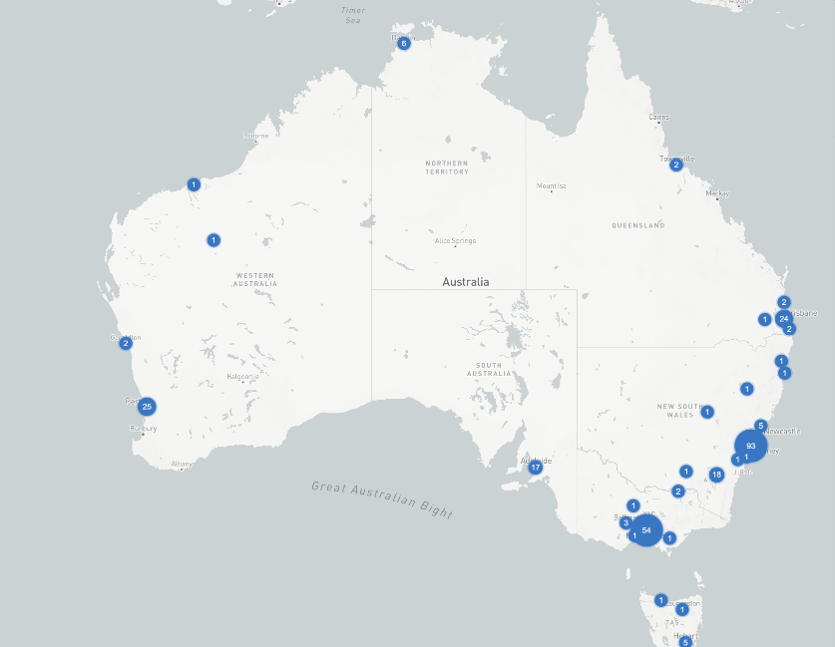
As seen in the map above, the overwhelming majority of data centres are concentrated in capital cities – Sydney has 93, Melbourne has 54, and Perth has 25, while regional and rural Australia have barely any.
This matters because data centres don't carry the same community narrative as other energy-intensive assets. A mine or a smelter in a country town brings environmental costs, but it also brings people, businesses and infrastructure to communities that would otherwise miss out. That trade-off is visible and legible.
With data centres, concentrated in cities and outer-suburban areas and owned by global technology companies, the community dividend is much harder for people to see or feel.
If we look to the United States which has a more mature data centre sector, community opposition to data centres has become a rare bipartisan issue, with temporary halts introduced in at least 13 states and polling showing around 70 per cent of residents in Virginia and Wisconsin believe the costs outweigh the benefits.
Australia is not there yet, but the trajectory suggests that social licence will become an increasingly pressing issue for the sector.
20
August
2026

100 days to the Victorian State Election
Read news article
20
August
2026
100 days to the Victorian State Election
Download White Paper



To receive York Park Group updates via email, please subscribe
